INTERVIEW WITH 12cupscafe - hall businesses part 2
If you think the best coffee on campus comes from a chain, you quite literally haven't knocked on the right doors. Tucked behind an unsuspecting door in Hall 12 is 12 Cups Cafe is a one-man operation run by a first-year student with a serious passion for specialty coffee. He's bred crayfish, sold high-end aquatic plants from Indonesia, run a bake sale, and now he's pulling shots from his hall room.
This interview we peek behind the scenes to see how Dong Xuan honed his passion as a coffee aficionado into a real and tangible business, the artisanal appreciation hub he’s known for today. At the core of his business model, bringing more exposure to diverse varieties of locally roasted coffee, he’s built not only an accessible pathway into the world of coffee with all its depth and nuance but also a place to share it.
Covered and Written By: Eishani Tripathi

(Photo Credits: 12cupscafe)
1. Hey there! Could you tell us a little about yourself, what you’re studying, and what your hall business is all about? What makes it special?
My name is Dong Xuan, I am currently a year one maritime studies student and the business that I am operating is called 12cupscafe. I think I view it more as a passion project, but what it really is, is my way to share my love for specialty coffee.
I like to feature local coffee roasters on a rotational basis and share how coffee can be more than just a commodity product but a beverage that can be appreciated for its different regions, its different varieties and its different flavors.
2. What inspired you to start a business from your hall room, and why your star product?
It started off as a love for coffee, and for me that meant drinking coffee everyday. As someone who has been drinking coffee and brewing coffee for about three years, it's part of my daily routine to have my machine, to have my equipment, and to brew myself a cup. Naturally, as I started my time at NTU, as I moved into a hall, of course all my coffee would come together with me. So, my business came more out of a realization for a potential opportunity.
3. What did it actually take to get your business up and running — and what challenges did you face along the way?
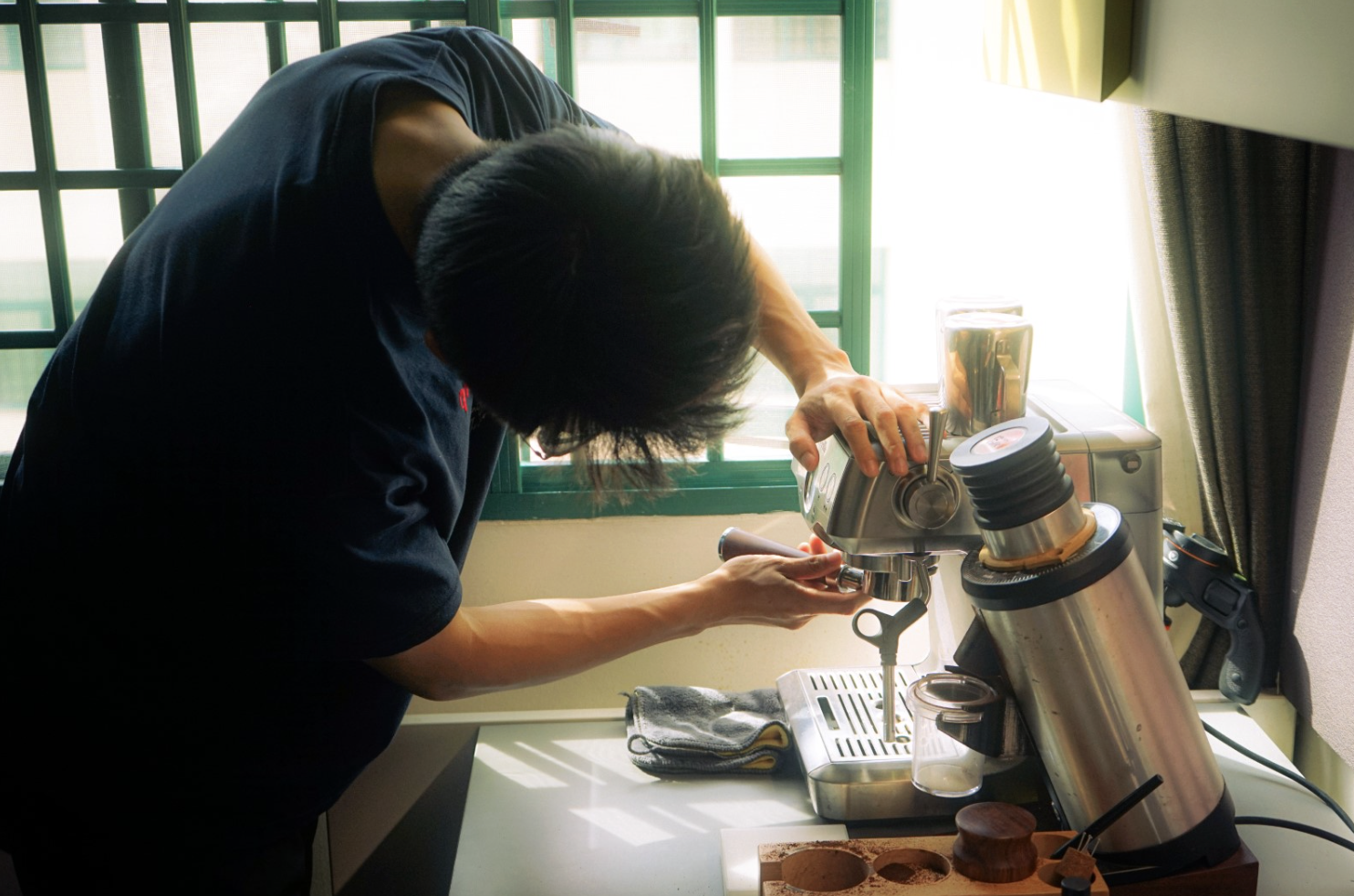
When it comes to starting a business, you could think about it in the most straightforward sense. It's just offering a product or selling a service. If you frame it that way, it's extremely easy. For example, if I were to apply it in my own sense, it's just making coffee, and making coffee is extremely easy.
But I guess in reality, when it comes to starting a business, it's not that straightforward. You have to think about how you want to brand yourself, how you want to position yourself, what sort of suppliers or vendors do you want to work with or engage with, what sort of specific workflows do you want to do, such that you can operate in an efficient way. And there's so many considerations, and then you have to consider the fact that you're a student as well.
(Photo Credits: 12cupscafe)
4. Had you tried running a business before this, or is this hall business your first venture?
When I was younger, I was obsessed with crayfishes and shrimps and I started this business of keeping, breeding and selling them.
That was my very first business. And then from there, I got interested in aquatic plants: a whole niche on this specific aquatic plant called Bucephalandra, originated in Indonesia. The idea was that this plant has many subspecies, and people like to collect it because it's extremely pretty and extremely hard to find.
Before coming into NTU, I really loved baking and I liked to share the bakes that I do online on my Instagram. Naturally, people were curious, people wanted to try. So, before coming into NTU, I did a bake sale, a small baking stint as well.
I think I'm very inclined to try to monetize my hobbies, mainly because I really like doing these things. And if I really like making coffee, I can only make as much as I can drink. Thus, in order for me to make more coffee, I have to make it for others.
And naturally, I think a business comes to mind.
5. But how does living in a hall shape the way you run your business?
I think the best answer for this is that there's a community when it comes to being in a uni hall, or being in a hall in general, to consider when you run your business.
In hall, you're surrounded by friends that you make along the way. And that gives you an opportunity to share your brand, your business, in a more intimate manner, as opposed to just viewing it over a screen.
That's one advantage for being in a uni hall. But I think living in a hall also replicates living in a HDB in the future. And, in this HDB block, you know a lot of people. You know more than 50%. You know almost all your neighbours. Drawing on that analogy, it's also helpful because it allows me to learn from what certain home-based businesses are doing, what sort of strategies they are implementing, how they think about their workflow.
So I think it's definitely a very unique arrangement. And I'm still figuring out what makes this extremely special. But for now, I think it's the community.
6. Has running your business changed how people see you in hall or how you view hall life itself?
I think that there come some sort of trade-offs… running a business does take time, energy, and resources.
For something like mine, I try to commit a specific time slot, a specific schedule for every week that I operate. A lot of people drink coffee out of habit, so it's important for me to be consistent in the timings that I operate. And so, I guess, being stuck to a schedule, and having a bit of rigidity, it causes you to miss out on certain things.
It doesn't allow you to be as spontaneous as you wish to be. Like, if I want to go and eat supper, or hang out till late, sometimes I'll have to say no. I'll have to mention that I need to get up early because I'm selling coffee. So, I guess there are definitely trade-offs when you operate a business, and when you stay in a hall.
So, whether it causes you to be viewed differently, I wouldn't say so. I think people generally see me the same way that they'll see other people, but I guess they know a fun fact about me. And it's something that they like to share with their other friends as well. It's something that adds to the hall image, I would say.

(Photo Credits: 12cupscafe)
7. Do you think your hall business has brought people together in any way?
My business definitely has added to the concept of having shared experiences. I think I've yet to fully introduce my business, what makes it special. I share the love of specialty coffee, coming from someone who has been brewing specialty coffee for the past three years, as someone who has worked in a specialty coffee cafe, and as someone who really, really loves the product and has tried a lot of local roasteries and cafes in Singapore, and international roasters overseas.
Every two weeks, given that I feature a new coffee roaster, a new edition, it's constantly changing, it's extremely dynamic. And so, for people who have tried my coffees, some do have shared experiences of trying a specific coffee from a specific roaster, and being able, and given a chance to talk about how they enjoyed this coffee, what they found, why they found this coffee to be interesting, or why they like this coffee.
And I really appreciate that this place can be where shared experiences can be created. And I guess that's an intention of mine as well, because what I like about specialty coffee is being able to elevate coffee beyond something that is known as a commodity. The idea of featuring different local roasters is to show that different local coffee roasters have a different flair in the way they roast coffee.
What I want to illustrate is that the way you roast, the way you source your coffee, plays an impact in the flavour that you get out of every single cup. So, for my customers to be able to pick up on these differences, to talk about their flavour experiences, and to have it as a shared experience, I think that's something special, and it's something I appreciate from what I do.
8. Hall businesses have been rising in recent years, so how do you think they’re changing hall culture?
When I operate, it's nice for people who already know each other to see each other again. So I guess being a little bit of a meeting place or meeting point for a lot of these people. I think having hall businesses in general improves the social aspect of hall life.
I guess it also inspires others to follow suit. Maybe the impact that you have on hall life might not be so direct in terms of the actual hall you're staying in, but it can also inspire people in other halls to think about starting something new for themselves. But of course, I think the impacts are to be determined because I feel like this is quite a new space.
9. Do you think seeing more hall businesses has encouraged students to become more entrepreneurial?
I think hall-based businesses, or regardless of whether it's a hall-based business, I think NTU student-led businesses are definitely a way to encourage others to take action. It definitely sets an example, and it gives people the confidence to start for themselves.
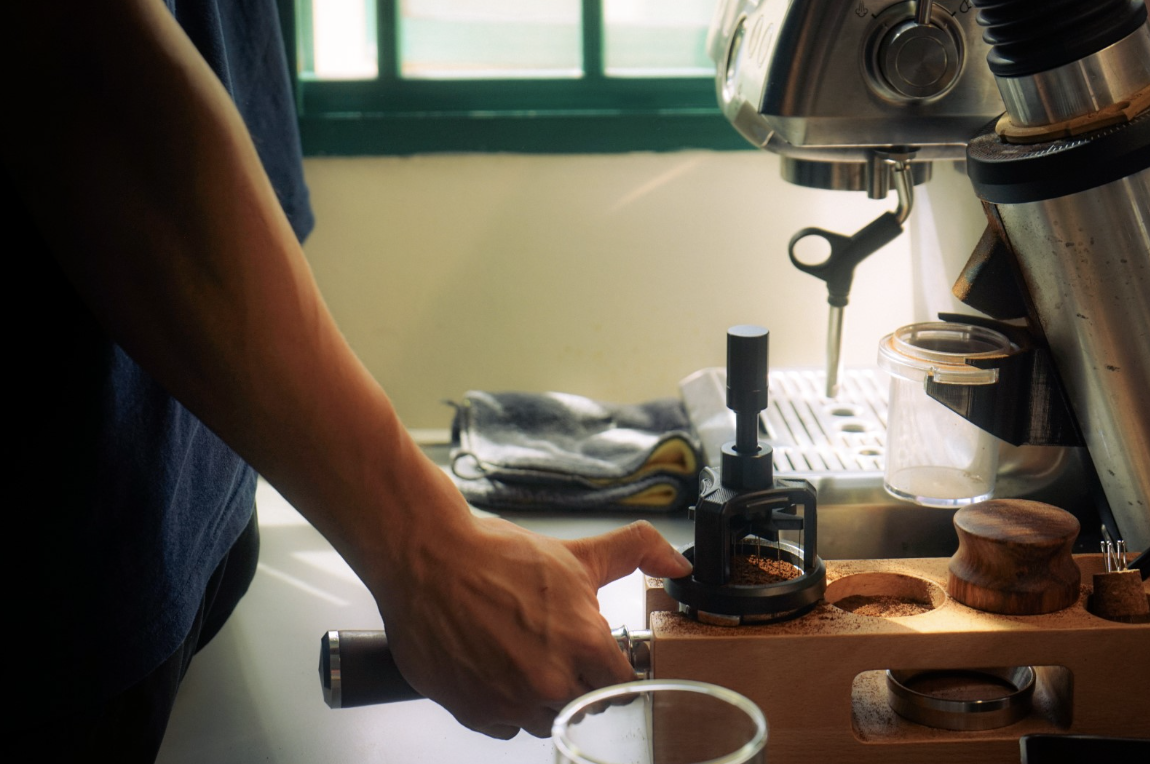
And if you turn your business into something a bit more personal and a bit more friendly, it also encourages people to reach out to you to get advice on how to start. I came across quite a number of people who asked me for advice on certain things and I really like to see that happening.
There are a lot of people who have great ideas in their mind, but they're not very sure on how to start.
(Photo Credits: 12cupscafe)
10. As a full-time student with CCAs and academics, how do you juggle running your hall business on top of everything else?
Last semester, I took 19 AUs. I committed about 6–8 hours a week operating my coffee business. That includes making coffee, placing orders, managing stock, editing pictures and videos. I was also Events Director at the Food and Fermentation Club, planning baking classes, and joined a wine society.
It definitely requires you to manage it, and it definitely requires you to manage your academics and your business at the same time. So how I manage it is I guess being very clear to myself, doing a bit of reflection, and asking yourself, "What are you capable of doing, and whether you can do it or not?".
11. Where do you see hall businesses going in the next few years?
I think hall businesses are going to be more popular in the future. The reason for that is also because I think this generation, our younger generation, we feel like the traditional job, the traditional trajectory, is not something that everyone wants, and we find that university is a good opportunity to put our ideas to testing, and I guess for the final time before you move on to the next phase of life, which is work.
Most of these businesses stem from their passions and their hobbies, and everyone has different interests. So definitely more student-led businesses, it's going to be more diverse.
I think there may also be more collaboration going on, which will be more exciting. I think that is relatively new. Most of these businesses are generally independent-led, but I would also love to see when a group of people come together to create a business.
Maybe certain halls will be known to be more entrepreneurial, so I guess that can contribute to the hall culture as well. Maybe for other students who are looking to come to NTU, maybe certain halls could be viewed as more entrepreneurial, more start-up friendly. So I guess that can contribute to the culture. It will be interesting to see new collaborations.
12. What advice would you give other students thinking of starting a hall business?
My best advice is to start first and figure it out later.
That might not be very easy, but once you start, you're forced to fix the problems that you find when you don't have things figured out. And that allows you to implement proper workflows, proper procedures, so that you can find a good balance. I think the best way to start is to share with everyone around you that you intend to.
At least for myself, when you do that, you create a sense of accountability, a sense of expectations. And from then on, people might expect you to start a business, and then that will encourage you to actually do it.
The challenges will vary from business to business, definitely a lot of logistics handling, and a lot of behind-the-scenes work that you won't really see. But I think running a business becomes a lot easier if you have an eye for good branding and marketing.
I think it's extremely helpful for you to be a good communicator, because before anyone experiences what your brand is or what your product is, you need to be able to communicate that over text or over video to an extent that they're interested enough to find out more. So being a good communicator is extremely important. Secondly is also, I guess, being tech-savvy.
Because you won't expect to meet everyone organically, but in some way you'll have to leverage social media, leverage tech, and put your brand out there for more people to see. And aside from that, on the point of being tech-savvy, it's also good for you to set up systems or platforms such that it can make your life easier. For example, for myself, I just set up an online ordering platform.
I learned this from talking to other people who operate home-based businesses, not necessarily in NTU. Leveraging technology helps you smoothen your workflow, it helps you consolidate your orders, and it takes away a lot of manual work that otherwise had to be done. So there are definitely a lot of hats that you have to put on as a business owner.
But all of these things, they only come along the way, you only learn it along the way. So yeah, it's important to start first.
(Photo Credits: 12cupscafe)
13. Any exciting new drinks or flavours coming up that we can look forward to?
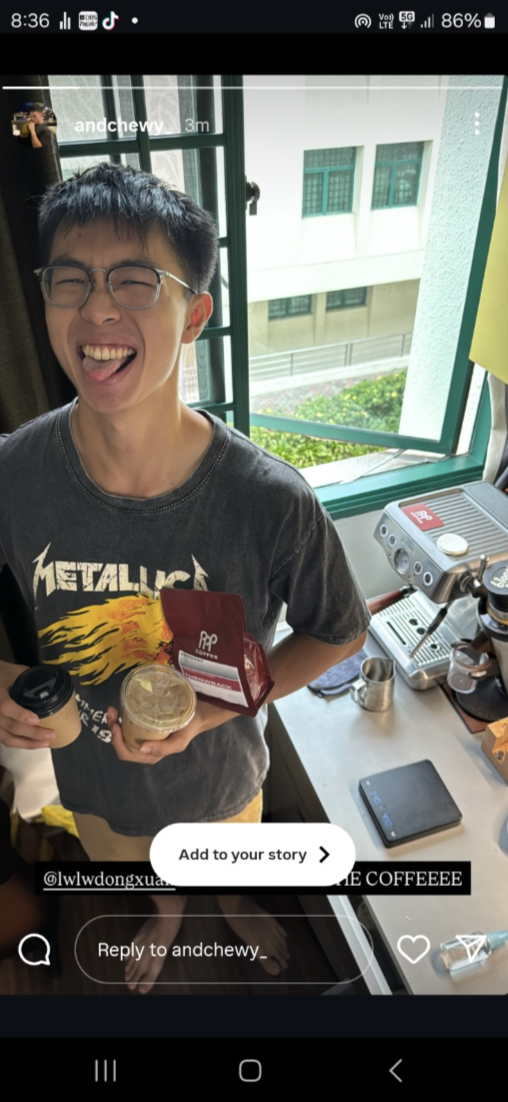
I just made an extremely big change — the introduction of an online ordering platform.
It smoothens payments, timing flexibility, and workflow. I encourage people to check it out, play with the interface.The current edition I’m serving is actually a special one — it’s called the Holiday Edition. Normally, each edition I feature comes from a specific café in Singapore, but since Semester 1 just ended and many people travelled overseas during the break, myself included, I wanted to do something different.
I went to Malacca, Malaysia, and brought back coffee from local roasteries there. At the same time, some of my friends also travelled abroad — one went to Perth in Australia, another to Jakarta in Indonesia, and another to Seoul in Korea. I’m really thankful to them because they brought back coffee from world‑renowned roasteries in those places.
So this Holiday Edition is a way of sharing not just my own travel experience, but also the unique coffees my friends picked up from around the world. It’s a collaborative, seasonal showcase that highlights how coffee can connect us across different regions and cultures.
What’s next for 12cc? Most recently, 12 Cups Cafe organised its first-ever event. As part of a 500-subscriber special, Dong Xuan reached out to Zero Coffee Roastery to explore ways to make the edition extra special. This led to 12 Cups Cafe hosting its first-ever event, an NTU exclusive visit to Zero’s roastery, one of Singapore’s largest online retailers for specialty coffee. There, ten students got to meet the mind behind the brand, ex-NUS graduate Ethan, who gave a deep dive into the processes, logistics, and challenges of running a business, as well as how they are pivoting for the future. In collaboration, Zero offered an exclusive 10% discount code for NTU students at the time of the event.
Disclaimer: The hall business in this interview is not affiliated with NTU’s Office of Commercial and Auxiliary Services (OCAS).
Telegram channel: https://t.me/its12cupscafe
Instagram: https://www.instagram.com/12cupscafe?utm_source=ig_web_button_share_sheet&igsh=ZDNlZDc0MzIxNw==

(Photo Credits: 12cupscafe)

Link to Telegram Channel

Check out their Instagram here!